Time. Part II
"To everything there is an hour and a time for every work under heaven; A time to plant and a time to pluck up what has been planted; A time to kill and a time to heal; A time to destroy and a time to build; A time to weep and a time to laugh.
Time to seek and time to lose; Time to keep and time to waste;
A time to tear and a time to sew; A time to be silent and a time to speak; A time to love and a time to hate;
A time for war and a time for peace."
Ecclesiastes
When the Soviet Union collapsed, in the ninety-first year, my family and I took a train to the capital! It was the year Kazakhstan gained its sovereignty. Those were not easy, crazy times, the dashing nineties. There was no money.
There was no understanding of how to live, no one knew how to earn money, and the state was still just trying on the long-awaited clothes of its independence and did not support the newly minted citizens.
No sooner had the "glorious" criminal era taken hold than it immediately overshadowed the "murky 80s", a time of endless apathy, kilometer-long queues, a series of government reshuffles, betrayal and secret distribution of political forces.
There were many reasons for the excitement, starting with the unfinished foundation of socialism, the protracted oil crisis, the years-long war in Afghanistan, and the firm belief of the Soviet people that if the USSR and the Party were removed, everything would be as good as even the Americans had never dreamed.
Everyone was just waiting for the coupons to be canceled soon, there would always be a lot of different sausages in the stores, and for jeans it would not be necessary to give a monthly salary of a factory worker with many years of work experience.
Many Soviet citizens were ready to say goodbye to their maimed homeland at the first opportunity and find a more stable haven. Life was changing unpredictably and not for the better: some lost huge sums of money, having invested all their money in shared construction of apartments, which they managed to sell twice. Someone took up shuttling and disappeared without a trace on the way from China. There was no one to ask and no one to complain to. No authorities, no police, no law. But in the absence of power, the bandits established their own rules of the game by blood and fear. It was a time of conflict and endless feuds. People were on edge, it seemed that the nation's gall bladder was about to burst from tension and constant aggression. "Massacres arose on any ground: domestic, ideological, national, religious – 'grabbing knives' over trifles – over a tube of toothpaste, over a packet of sugar, over a packet of washing powder, over a seat on the streetcar."
Former teachers, doctors, and engineers became "Chelnoks". If in Soviet times boys dreamed of being astronauts, in the 90s – racketeers, and girls – currency prostitutes". By the mouths of babes, honestly and to tears, reflecting the era of great change, created new capitalist values. Everyone wanted to live and have a lot of money – just like on TV
The students desperately rushed into semi-dark basements, pumped their muscles, beat their brains out in constant skirmishes, put on leather jackets, gold chains, – formed a harsh layer of prosperous criminals.
* * *
When we got off the train, Alma-Ata looked doomed and quiet. The large-scale construction projects of the former glory of the USSR had frozen. Something was still being completed, as if out of habit, but the construction cranes were silent, turning into silent tombstones of fading communism.
Some enterprises were still working, apathetically and autonomously, as far as they could. People were working, like the whole state, with a lost sense of necessity in the actions they were doing. Wages were delayed. Numerous layoffs, bewilderment and silence in the streets. There were no people or cars to be seen on the roads…..
With his wife Natalia, he organized a travel agency and started selling car parts. Everything was just becoming capitalist at that time:
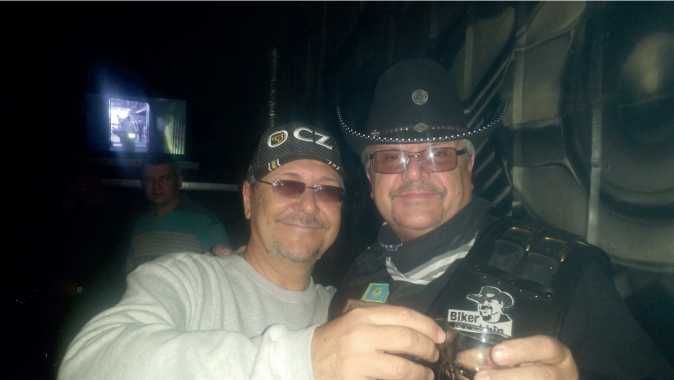
I knew that freedom was something else, more transparent and pure, I never stopped looking for it, walking towards it in defiance.,,,,"
No one could understand how to do it right, and whether it was "right" or not; accountants struggled with tax reports, the tax office did not know how to accept them and what to penalize them for. Handing in the balance sheet became a big holiday – they bought cake and champagne. It was easy to come across a set of military maps from the Great Patriotic War with a "Top Secret" stamp and buy them for pennies from the same merchant who had just tried to sell you a Caravan newspaper or a pack of imported gum.
People were reading print media and watching TV with interest – so much was interesting, new and open for discussion. We encountered an unknown life that we had dreamed of watching fiction movies and never hoped to see with our own eyes.
It was easy to find oneself between heaven and earth, to hover in space and not breathe – in case they noticed, became interested and asked questions. "Shooters" were becoming a frequent phenomenon, familiar to ordinary citizens as well. Even civilians could get a mark from a bandit's bullet.
"Overnight, the collapse of everyday life placed man in an absolutely bestial position. The realities of the emerging future increasingly resembled a large brothel in which the main goal of everyone was to sell. Everything was sold: comrades, ideals, beliefs, principles, and even one's own person. For cheap. And not so much for more and more ephemeral money, but for things more tangible – for a job, for transparent party benefits, for a box of chocolates, for half a liter of diluted vodka, for a bar of toilet soap." My wife and I recall those years without horror, with a slight smile. We have not forgotten, we remember. We worked as hard as we could, carrying things, carrying money. Dark people, dark nooks and crannies, and the same thoughts. When I think back on it all, all I see are shadows, cigarette smoke, a black spot instead of a future. Not much good, but we smiled, raised children.
History seemed to call us to wisdom, to deep humanity, to grow up each as a person. To accept true values and make a choice here and now not to lose faith in ourselves, to become a wall and 98
to support, to overshadow, to prevent despair, to nurture and educate their children.
It was the very moment when, being in short supply yourself, you shared the last of your wealth with your relatives, lending a shoulder, staggering from fatigue. And even though it was a peaceful time, without the threat of fascism and blockade wars – mockingly, in quotation marks and with a meaningful colon, pompous phrases about the great future were no longer perceived by the consciousness, and progress was ruled by the natural instinct of survival. It is strange to call this time freedom, maybe it was, if not wild, then bloody to the point of nausea.
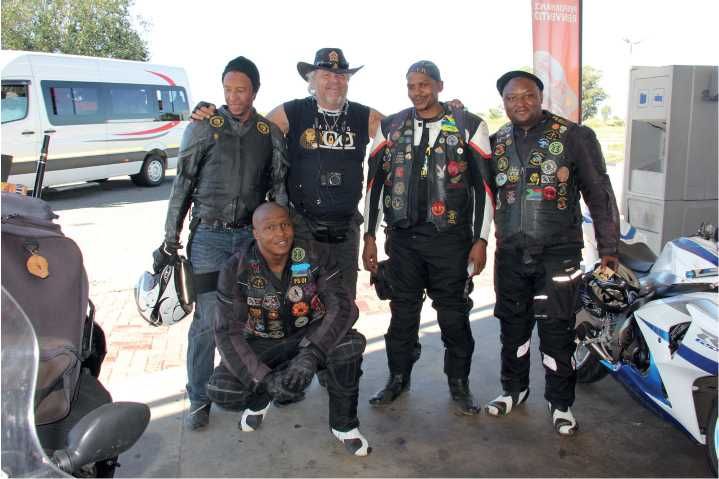
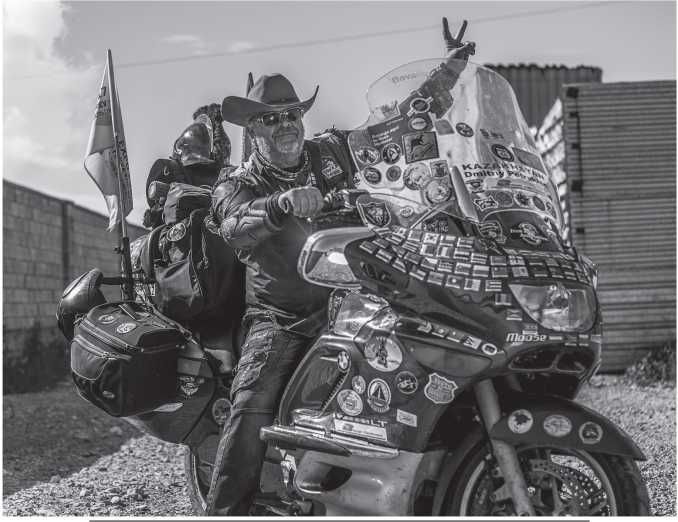
I always knew that the day would come, the hour would strike….
* * *
In the 90s I witnessed the national destruction and revival, witnessed contradictory events, but I remained a son of my native land, who did not lose faith in man and his main values.
I knew that freedom was something else, something more transparent and pure. I did not stop looking for it, I went to it against circumstances, against someone's beliefs and predictions. Outside of politics and the laws of economics, with a firm intention to live by honor, without losing my dignity, with my head held up proudly, to walk bravely through the world, spinning the Earth around the axis counterclockwise.
Pingback: Bell — Байкер Петрухин